
Frequently Asked Questions
Common questions about DMI and our approach to missions
Yes. DMI is a division of a Philippine Securities and Exchange Commission (SEC) registered Non-Stock / Non-Profit corporation with its own Board of Trustees. Furthermore, DMI is a ministry of Christar and donations are normally given through Christar US which is a 501(c)3 non-profit, registered in the US and ECFA accredited. See here.
We live about 10km from where ISIS and other like-minded Islamic terrorist groups operate. Our primary fundraising process is to plead fellow believers to generously support the mission... their primary fundraising process is to kidnap people like us, or our children, and take us to their place and get us to give a big donation as ransom for our life...
One of these days we will have to face the risk and be more public. But today is not that day. As our Lord says, wise as serpents, gentle as doves...
There are many women in our ministry, and we do welcome women whom the Lord sends, and we openly recognize that the Lord has powerfully used women for many missions throughout history. However, for two reasons, we have as our main focus the raising up of men for this arena.
First, Muslim men dominate their culture. If you want to reach their nation, you have to reach their men. And, it is a clear cultural distinction that Muslim men do not normally listen to women. We need men to reach them.
Second, our focus is church planting. In planting a church, normally the missionary becomes the first Elder/Pastor of that church. Since Elder/Pastor is limited by the Bible to men, we need more men to be the church planters. Again, we are NOT saying "No" to women, but our first priority is to fill the gap (recognized by all) of the pressing need in raising up men to this ministry.
First, as we are all brothers together on the same team... team Christ is King... In practice, DMI does not in any way oppose the use of other missionary strategies. We trust that the Lord will accomplish His will as He calls each of us. However, after careful study of history and the Bible, we do believe that what is often referred to as the "Proclamation model" is more faithful to the New Testament model of church planting as practiced in Jerusalem and as done by Paul in the Greco-Roman world, and is the model that has, in the long term, produced more enduring fruit than any other model. Though the proclamation method supposedly appears to take longer, a look into the history of missions shows that while the Lord has produced fruit in rapid manner (e.g. Patrick in Ireland), the timeframe we present in our strategy page is actually the most common process and timeframe for most people groups.
Given all this, we have chosen to put our focus and efforts into the Proclamation Model. We do this because we strongly believe it is the most likely to produce a strong and enduring church capable of transforming the people of the Maranao, Badjao, and other Muslim tribes of southern Philippines.
If you want the "inside baseball" discussion about the two primary missions models being discussed in the missions world today, here is a good article on that. As stated earlier, we believe that the practitioners of the CPM/DMM model are on the same team as us, and that they do have valid critiques of the "older" model, but in our context we believe that the Proclamation Model is the most faithful and effective and so have chosen to focus there in.
We love our Orality focused missions brethren. In fact, if you feel led to support or join an Orality focused mission, head over here. However, as I think the Orality leaders would agree, Orality is a branch, and without the root of the written word cannot properly function. There are already people who are doing a much better job than we can in Orality. But, in our field, there is a lack in equipping and training up for the use and study of the written word, and we aim to focus there.
Even people groups who are primarily oral cannot have a stable oral tradition of the Bible without a written Bible and leaders who can use it. Furthermore, we believe that it is of great benefit to all people groups to learn to be a literate civilization. Just as Protestant Europe and America have been the primary beneficiaries of literacy because Luther and Tyndale brought them the Bible in their language, we believe that it is spiritually and materially good and proper to encourage literacy via the written word through the Bible for all people groups.
We see ourselves as partners with those doing Orality — and they are doing a better job than we are... We need to catch up!
Here are some charts of the timeline for establishing the church in various nations, including Paul's work in the Roman empire. As you can see, the big gains normally happen after 50-300 years of growth. There are exceptions where the Lord has worked in different ways, but this timeframe is generally normative.

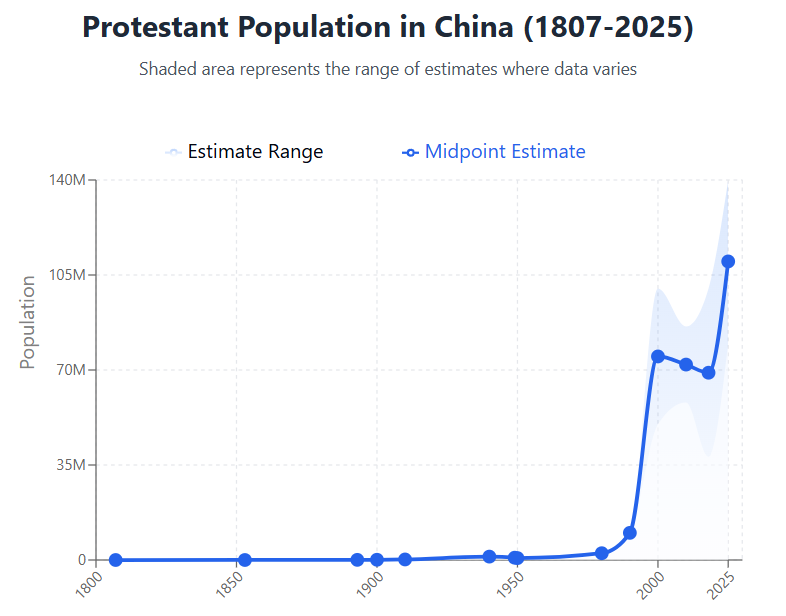
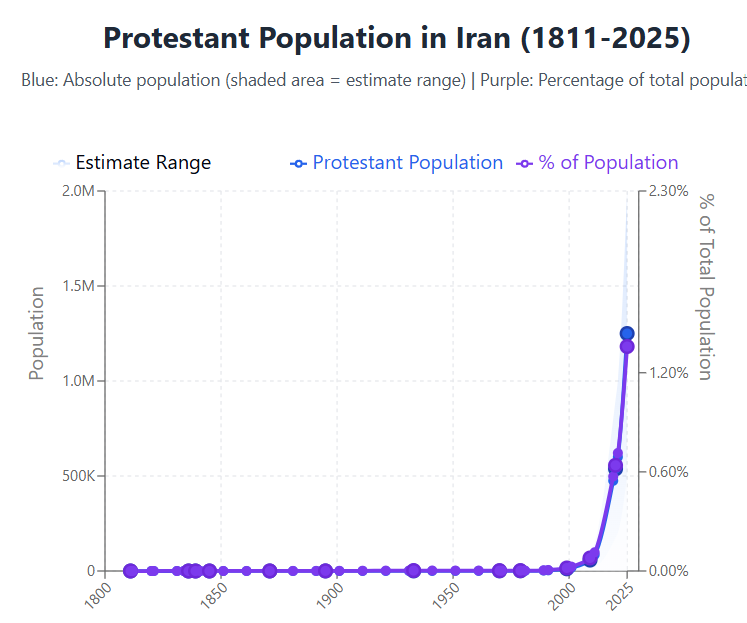

Note — The missions effort in the Catholic Philippines was one of the most highly resourced efforts in one of the most permissive environments of any missions work, and yet still took nearly 50 years to start producing significant fruit.