
Our Field
Where in the world — and who are our people
Where in the World
As was shown in Our Philosophy of Missions page, we are located at the eastern edge of Islamic civilization. This is the farthest eastern extent of Islam. However, since the nation of Philippines is a democratic, nominally Catholic nation, it is legal (though not always safe) to conduct missions.
This part of the world is one of the most active in Islamic violence, and DMI is located near some of the worst of it. There are religious and political and ethnic reasons for this state of violence. However, the nature of Islam and its normative historical response when the population exceeds 30% or so of a contented region, is a key factor in this danger.
DMI's goal is, in direct coordination with the local and global church, to recruit, develop, and equip Bible Translators, leaders in Evangelism, Apologetics, Polemics, and mercy ministry, and cross-cultural Church Planters to bring the Gospel to the people of Southern Philippines who are held by the Devil in darkness. We believe that the best, and likely only way to consistent peace in this region is if the people on both sides of the conflict are to become brothers in Christ.


Who Are Our People: Cebuano / Bisaya
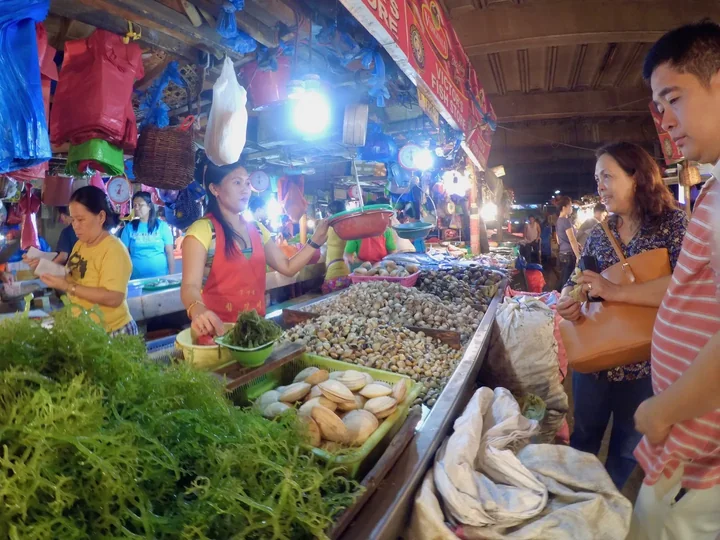
The majority population in our region are the Cebuano / Bisaya. Almost all (non-Romish) Christians in the region are Bisaya. A significant majority of our staff, students, and missions partners would identify themselves as Bisaya.
The Bisaya are a mix of tribes that originated in the central Philippine Islands of Cebu, Mactan, and Negros, but also often subsume the identities of minority non-Muslim tribes in Mindanao (e.g. Higaonan). They are primarily descended from multiple waves of migration to Mindanao from central Philippines. This migration has been going on for about the last 250 years, encouraged by the Spanish and US, in support of the objective of suppressing the Muslim power in Mindanao.
Even before the Spanish arrival, the Muslim tribes were starting to expand their kingdoms and colonize the Cebuano and Tagalog lands of what would later become central and northern Philippines. After Spanish arrival, and the Cebuano joining the Spanish religion and becoming subordinate to them, the hostility of the Muslim tribes to the Cebuano became far worse. In fact, for nearly 100 years, one of the primary sources of income for the Muslim Kingdoms of Sulu and Maguindanao was the kidnapping of Cebuano people for sale as slaves into Indonesia and beyond. Thus, when the Spanish asked the Cebuano to help counter colonize by establishing cities in unoccupied but strategic areas of Mindanao, they were quite happy to do so.
When the US "purchased" Philippines from Spain, it felt that the Cebuano were more peaceful and progressive than the Muslim tribes, and encouraged continued Cebuano migration to Mindanao. Lastly, after independence, the nominally Catholic government in Manila continued to encourage Cebuano migration to Mindanao. Thus, for ethnic, political, and religious reasons, the Cebuano / Bisaya people have been at some level of war with the Muslim tribes for over 400 years.
The Cebuano are mostly nominal Catholics, practicing a mix of folk animism with traditional Spanish Catholicism. This includes nearly Hindu-like worship of idols of Mary and various Catholic "Saints" (though they use the euphemism "veneration"). Every town has a patron saint and idols and pictures of that person are common. Furthermore, Philippines has one of the strongest Marian cults in the Catholic world and "veneration" of idols of Mary are constant.

These practices are actually one of the biggest barriers to bringing the Gospel to the Muslims. Why? Because the rank idolatry and false Gospel of the Roman prelate and his magisterium in Philippines give the Muslims a very false view of what Christianity is. Therefore, even though DMI is focused primarily on Muslim ministry, and a majority of our members and students are Cebuano, we consider the strengthening of the existing Cebuano church and planting of new faithful Cebuano churches in the area to be a key supporting mission objective.
However, it should be noted that most Cebuano (non-Roman) Christians thank the Lord for His providence in using the Catholic Spanish to halt the expansion of Islam into the Philippines. Had the Spanish not arrived, the Philippines could have likely ended up a majority Muslim nation like Indonesia, openly hostile to the Gospel.

Cebuano / Bisaya Speakers: 22 Million (7 dialects) • Religion: Roman Catholic (Animist Influenced) 85%, Cults 7%, Christians 8%, Other 2% • Poverty Level: Approx. 50%
Who Are Our People: Maranao

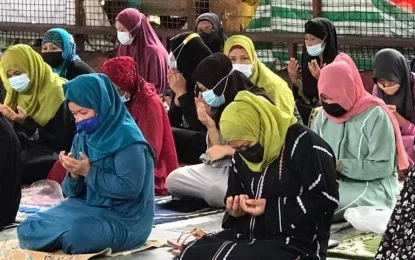
The Maranao are one of the biggest of the thirteen Muslim tribes in the Philippines. They are also considered one of the most committed to Islam and to political independence from the Philippines. Together with the Tausug they represent a majority of the power of ISIS and the most prevalent Violent Terrorist Organizations (VTOs). At the present there is only 1 church that is public with a plurality of its members and leaders being Maranao, though there are other underground churches. Estimates of the Christian population vary, but likely no more than a small fraction of a percent of the population. Bringing the Maranao to Christ would be like bringing the Vikings or Picts to Christ. Great danger, but great joy and blessings.
Islam arrived in the Philippines primarily through contact with Muslim merchants, some of whom settled in Philippines, and later by Muslim missionaries. Converting to Islam brought greater tribal unity, organization, and improved legal processes over their original Pagan ways. This led to consolidation of clans into kingdoms (known as Sultanates) and rapid growth in power and prosperity. The Maranao are a split from the once dominant Maguindanao Sultanate. For various tribal conflict reasons, they formed their own nation around Lake Lanao. Hence the name Maranao, which means the people of the Lake.

With growing capacity, soon the Muslim tribes, particularly the Tausug and Maguindanao, began expanding and founding colonies in Cebuano and Tagalog lands, even as far away as present day Manila. In fact, when the Spanish first invaded Manila, the city was a Muslim colony.
Following Magellan's expedition which discovered the Philippines for the Europeans (Philippines means Islands of King Phillip II, the King of Spain at that time), the Spanish decided to colonize the islands. They quickly conquered all of the pagan tribes and converted them to Catholicism. However, given that the Spanish were victims for 700 years of Muslim colonization, they were naturally great enemies to any Muslims. Furthermore, given the fact that the tribes of western Mindanao were now Muslims, any notion of being subjects under Catholics, especially 2nd tier Castilian conquistadors, was deeply abhorrent to their Islamic culture and identity. This made the two sides natural enemies.
Conflict between the Spanish, their Catholic Filipino allies and the Muslim Sultanates and tribes quickly became endemic. Muslim Sultanates initially had the upper hand and regularly were able to raid Catholic Bisaya towns all throughout the Southern and Central Philippines, even sometimes in the Northern Philippines. There was a time when all of the Philippines lived in fear of the power of the Tausug, Maguindanao, Maranao, and Badjao raiders.
However, as the Spanish brought more of their advanced naval technology to bear, eventually the Muslim Kingdoms were pushed back. To ensure that their naval success could be sustained, and to establish a barrier in Mindanao itself, the Spanish established the cities of Cagayan de Oro, Iligan, Zamboanga, and Cotabato, along the northern and western coast. They populated these cities with colonists from their Cebuano / Bisaya allies. This began about 250 years of Cebuano / Bisaya migration to Mindanao that would radically change the ethnic structure and power dynamics of the island.
Once the unmatched power in Mindanao, especially in the western part of the island, slowly the Muslim tribes found themselves being outnumbered and pushed out. By the 20th century, the Bisaya Catholics became 70% of the population and their cities grew to dominate the economic and industrial centers of the land. And though the Spanish were never able to conquer them, over time the power and influence of the Muslim Sultanates greatly diminished while Catholic power rose.
Once the United States "purchased" Philippines from Spain, the Muslim kingdoms continued their fight, now against the new Christian rulers. However, the US military was far superior to the Spanish colonial forces. After about 10 years of fighting, in which the Maranao featured as a particularly hard opponent, a majority of the Muslim tribes were subdued and various treaties put them under US protectorate. During this time, the US tried to improve the education and infrastructure of Philippines, including that of the Muslim tribes. However, a desire to stay independent and to avoid being influenced by Christian culture and beliefs generally led to resistance. Thus, the US turned to the Bisaya and continued to support the migration of Bisaya to Mindanao.
World War II brought on a strange situation where the Muslim tribes sided with the US against the Japanese. In fact, the Maranao contributed significantly to the US effort. After the war, as promised, the US granted the Philippines independence. However, the Maranao and other tribes attempted to get the US to retain ownership of the Muslim areas as they preferred American liberal rule to their more natural enemy, the Filipino Catholics. The US, uninterested in further colonies, refused and Philippines was granted independence as a whole.
Initially there was a honeymoon period, but by the 1960s, growing Islamic nationalistic identities world-wide, as well as a series of what the Muslim people saw as atrocities led by the Catholic government in Manila, the Maranao and a majority of the other Muslim tribes rebelled against the government. That war has killed about 100,000 people and functionally continues to this day. Though there is a peace effort that is giving semi-autonomous status to the Muslim dominated areas, there remain many groups such as ISIS-Philippines who are dedicated to retaking the entire Mindanao, or even dominating the Philippines as a whole.

Maranao Speakers: 1.6 Million • Known as "People of the Lake" • Religion: Islam >99.9% • Poverty Level: Approx. 70%
Who Are Our People: Badjao / Sama

The Badjao people are a subset of the Sama people. They are a sea gypsy civilization who have been dramatically impacted by the arrival of modern civilization.
Imagine for a thousand years you lived in stilt houses along beautiful beaches. You woke up whenever, went fishing in plentiful oceans and sent your women ashore to get bananas and root crops. Came back, eat, hang out... live simple life... now to be clear this is NOT a sinless paradise life of Eden or something. Plenty of sinfulness, but mostly a very simple living. Then the Maranao and Tausug tell you that the real god is Allah, and if you pay at least basic homage to that, they will ally with you. Then they transform you into some of the fiercest pirates and kidnappers of slaves of their enemies the Bisaya... Life is good...
Then suddenly one day your allies lose, and like aliens from another planet, your fishing area gets surrounded by modern cities. You now compete with commercial fishers and your women can't just go ashore to collect food, these Bisaya people are there and have this piece of paper with symbols on it that they say gives them ownership of the land... whatever that's supposed to mean... and if you don't like it you can go to a court... whatever that is... and argue with a powerful judge who doesn't speak your language.
That's this life of the average Badjao village. That is where we need 1–2 young couples to live and learn and bring the Gospel to transform hearts to obedience to Christ. That is what they need, not more jobs programs they don't understand.

Badjao / Sama Speakers: 200,000–400,000 • Fishing Gypsies • Religion: Islam >99% • Poverty Level: Approx. 95%